Restaurant owners open their monthly P&L reports, check sales, then go down to the bottom and close the report.
Are you familiar with the situation?
The report may be perfectly exact, but if those are the only two numbers being reviewed, the majority of its worth is left on the table.
This shouldn’t force them to be more dependent on an accounting firm. It should help them become more comfortable with their own numbers. You don’t need to be an expert in accounting, or to spend the night entering invoices. However, you must understand why profit moved and what happened to costs for food and labor and what issues need focus next week.
Bookkeeping Chef’s mission is to automate bookkeeping tasks that do not require the time of restaurant owners while also providing customers with more precise financial information they can use.
You should begin by looking at the Weekly Numbers and not just month-end numbers.
A monthly P&L is crucial, but restaurants don’t run monthly. This week, managers are planning their work. Chef has ordered food. Vendors change prices now.
The weekly reports on Bookkeeping Chef’s prime-cost report are included with the financial statements for the month.
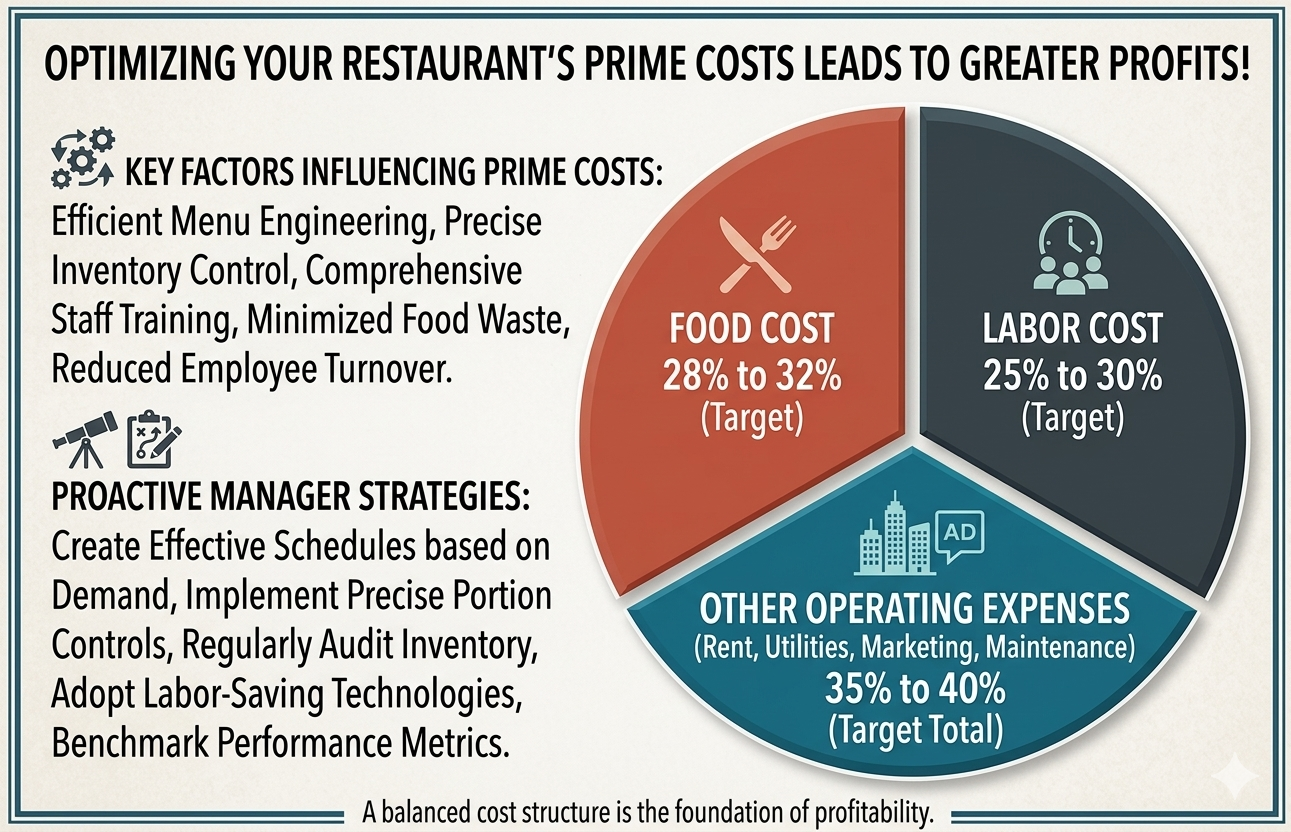
The main cost is a combination of cost of goods and labor and labor, two areas where the restaurant could achieve rapid growth. The information provided by the Bookkeeping Chef indicates that the prime cost typically accounts for 60% of sales in restaurants.
Imagine a situation in which sales are not changing at all, but prime costs are increasing. The percentage doesn’t give the solution. It provides the person with the reason to conduct an investigation.
Was there an increase in the number of hours was worked? Did overtime happen? Changes in food costs? An invoice from a vendor appeared unusually large? Did the sales mix change?
That is far more useful than finding the same problem several weeks later.
Automate the repetitive Work
DIY bookkeeping doesn’t need to be difficult. It can simply involve manually transfer POS (point of sale) totals into spreadsheets.
Automating the bookkeeping processes of restaurants can reduce repeated data movement. The service is connected to POS systems and QuickBooks, vendor platforms recipes and inventory management, and AP/payment instruments.
Automation is not the objective.
The objective is to stop manual data entry, and ensure that financial records are up-to-date to allow owners to take more time in reviewing the data rather than assembling it.
It is a totally different bookkeeping model for restaurants. Technology handles the mechanics while the proprietor is involved in the financial side.
Learn to ask the P&L Better Questions
A P&L is less daunting when you stop treating it as an accounting test.
Start by analyzing the sales. Look at the cost needed to make the sales. Compare the performance of food and beverages. Take into consideration the labor. Make sure you reduce your operational expenses.
In addition, it is important to compare timeframes.
If profits increased but sales grew, but profit wasn’t, something else between those two lines has changed. If the cost of food increased, inquire about what changed operationally. Compare the staffing levels and sales activities in case labor percentages have changed. If you notice a strange number, investigate rather than assuming the restaurant simply had a bad month.
Bookkeeping Chef offers monthly P&Ls which are finalized in just five business days, allowing owners the opportunity to look over recent performance rather than receiving financial statements long after the period of operation is over.
For owners searching bookkeeping restaurant solutions, speed is useful but understanding is the bigger objective.
DIY doesn’t have to mean Self-Employing Everything
There’s a middle-ground between delegating the entire financial responsibility to another and having your own full-time bookkeeper.
You could be a part of a business owner and not be required to complete all accounting duties manually.
It could be as easy as utilizing automated system connections to ensure that the information is flowing. However, it could be as intricate and complicated review of the monthly P&L or a review of a weekly Prime-cost report.
Services for bookkeeping in restaurants that focus in restaurant bookkeeping can help proprietors understand the meaning of the reports by arranging the books and keeping them organized.
This does not mean that the bookkeeper will be able to perform every bookkeeping task.
Owners can sit down with an P&L and have an intelligent discussion on the business.
The goal is financial independence without reporting
Restaurants already generate huge amounts of information. A dashboard may not always make sense.
The real value is when an operator can look at a weekly report on prime costs and recognize that something changed, then access the P&L and know what to do next.
Bookkeeping Chef’s method combines restaurant bookkeeping automation weekly reporting along with monthly P&Ls and restaurant-specific financial support to help you achieve this.
Automate repetitive tasks. Examine your prime cost each week. Understand the language employed within your P&L.
You do not have to be an accountant to be an.
Owners who are familiar with the financial aspects of their own establishments can make better decisions.